 An Initiative of the Tasmanian Government
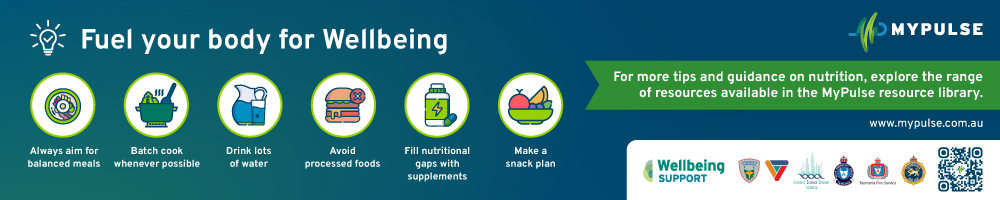
Fuel yourbody for Wellbeing
Nutrition Tips: Shift Work, On-the-Go, and in the Office.
For emergency service workers demanding work environments and schedules can greatly influence health and wellbeing outcomes. Add in the increased complexity of working extended shifts, being on-call, working in remote or rural areas, and limited access to fresh food, maintaining a balanced and nutritious diet can be difficult (and costly).
Whether you’re spending long hours at a desk, on the move, or work irregular shifts, maintaining proper nutrition is a key factor in staying energised, focused, and healthy.
For Office Workers: Combatting the Effects of Prolonged Sitting
For some, desk jobs can involve long hours of sitting and minimal physical activity. While sitting for periods throughout the day is okay, prolonged sedentary behaviour can lead to health concerns such as high blood sugar, obesity, excess abdominal fat, and unhealthy cholesterol levels.
To counter these risks, consider the following tips:
Choose nutrient-dense snacks: Opt for fresh fruits, nuts, seeds, or yoghurt instead of processed snacks. These provide sustained energy without the sugar crash.
Stay hydrated: Keep a water bottle at your desk and sip throughout the day to maintain focus and energy.
Plan balanced meals: Include lean proteins, whole grains, and plenty of vegetables in your meals to keep you full and energised.
Take movement breaks: Set reminders to stand, stretch, or take a short walk every hour to improve circulation and reduce stiffness.
For People on the Go: Fueling a Busy Lifestyle
If your work keeps you constantly moving, it’s easy to skip meals or rely on fast food. However, proper nutrition is key to maintaining your energy and performance.
Pack portable snacks: Carry items like trail mix, protein bars, or fresh fruit to avoid unhealthy food choices when hunger strikes.
Meal prep in advance: Prepare balanced meals at home that you can take with you, ensuring you have access to nutritious options.
Stay mindful of portion sizes: Eating on the go can lead to overeating. Pay attention to portion sizes to avoid feeling sluggish.
Hydrate on the move: Keep a reusable water bottle handy to stay hydrated throughout the day.
For Shift Workers: Managing Irregular Hours
Shift work often disrupts regular eating, sleeping, and movement routines, which can lead to poor immunity, mental health challenges, and an increased risk of cardiovascular disease. Proper nutrition can help mitigate these risks and keep you alert and focused during your shifts.
Stick to a schedule: Try to eat meals at consistent times, even if your shifts vary. This helps regulate your body’s internal clock.
Choose energy-boosting foods: Incorporate complex carbohydrates, lean proteins, and healthy fats to sustain energy levels during long shifts.
Avoid heavy meals before bed: If your shift ends late, opt for a light snack to avoid disrupting your sleep.
Limit caffeine intake: While caffeine can help you stay alert, consuming too much (especially late in your shift) can interfere with sleep.
Additional Resources
For more tips and guidance, check out these resources:
A range of other helpful guides can be found in the MyPulse resource library.