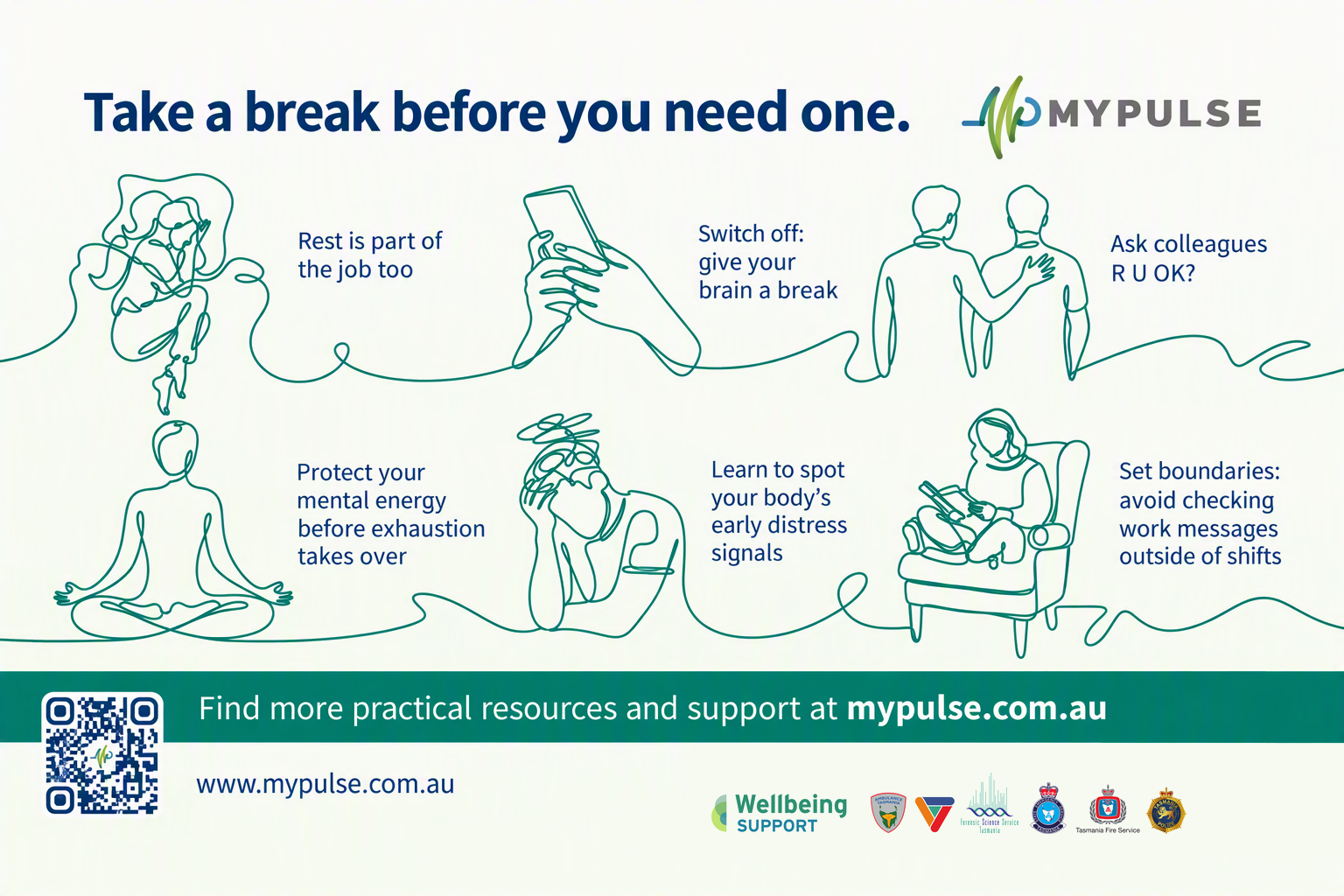
How Emergency Service Workers Can Protect Themselves from Burnout
Recognising Burnout in Emergency Service Workers
Most people who choose a career in emergency services have a desire to help others. Keeping communities safe takes more than frontline response alone. It takes people working across a range of operational and support roles, all of which play an important part of protecting and supporting others.
That same dedication can also put you at risk of one of the most invisible threats to your wellbeing: burnout.
Australian research within the last 10 years suggests burnout is common among emergency service personnel. Studies of Australian police officers and paramedics have found that around half or more respondents reported moderate to high levels of burnout or met the criteria for burnout.
Here we look at the signs that you might be experiencing burnout and how to overcome it, as well as tips on how to prevent burnout if you feel you might be close.
What is burnout and how does it look in emergency services?
Burnout is more than feeling tired. It can affect concentration, memory, motivation, relationships and work performance. Recovery often involves restoring energy, reducing ongoing stressors, reconnecting with supportive people and reviewing the work habits that may be keeping the stress cycle going.
Over time, the demands of work can gradually deplete energy, affect concentration and reduce the capacity to recover between shifts. Research suggests that burnout is associated not only with exhaustion, but also difficulties with attention, memory, emotional wellbeing and work functioning. It's important to remember that burnout is not a sign of weakness or a lack of commitment. Many highly capable and dedicated people experience burnout when workplace demands remain high for extended periods without adequate recovery and support.
"Our research shows that … burnout is over-represented in dutiful, reliable, caring people … That's part of its tragedy - that burnout is over-represented in good people." – Gordon Parker, Founder of the Black Dog Institute.
Although burnout is not a standalone medical condition, it has been added to the 11th Revision of the International Classification of Diseases (ICD-11) as an occupational phenomenon.
According to Beyond Blue, you might feel:
isolated and trapped
irritable
a lack of your usual energy or motivation
less satisfied with work
exhausted or drained
a sense of procrastination
disengaged from work you used to value
unable to sleep as you usually do
headaches and body pain
a feeling of building stress that won’t go away
Burnout thrives when stress is chronic and your inner resources don’t match the load. In an emergency services role, it could be exacerbated by factors including:
Long or irregular shifts with little predictable rest.
Heavy emotional weight such as repeated exposure to suffering, trauma and life-and-death scenarios.
Frustration with systems and processes. Common concerns may be administrative backlogs, resource limitations, inefficient processes and workload pressure.
The expectation to ‘carry on’ when you’re close to your limit.
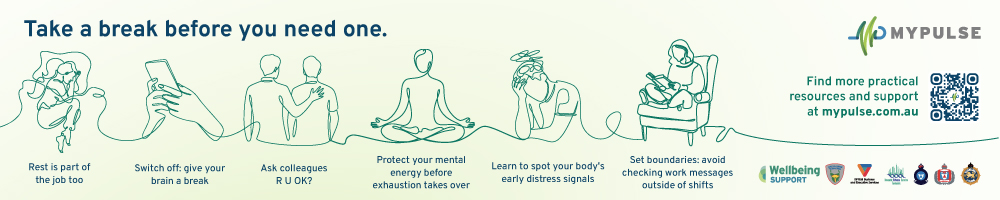
Strategies to prevent or recover from burnout and how to recognise early signs of burnout
1. Spot the early signs
Have you noticed yourself watching the clock on shifts? Ask yourself: Am I distancing from colleagues? Do I dread going to work or feel like nothing I do matters? Recognising these signs early gives you a chance to intervene.
MyPulse’s free, confidential mental health screen can help you spot the signs early and find the right support.
2. Protect rest, work life integration and make yourself the priority
Taking the time to recover matters. Regularly skipping rest days, filling downtime with more work or noticing your sleep is being eroded by shift patterns may be signs that work is eating into your recovery times. As best you can, try to prioritise sleep and recovery routines and make sure you’re finding time for activities that you enjoy when you’re not at work, such as hobbies or spending time with family and friends.
Read: Hobbies Fact Sheet
3. Engage with your support network and lookout for your colleagues
Burnout doesn’t live in isolation. It thrives when people feel alone, unsupported or unable to talk. Reach out to your peer-support network for check-ins and have open conversations about mental health. Remember you always have access to complete a MyPulse mental or physical health screen, and our 24/7 Wellbeing Support team are here for you when you need on 6173 2873.
4. Set boundaries and expectations
One of the hardest boundaries to set can be with yourself. Many emergency service workers are used to putting others first, saying yes to extra shifts, and pushing through tough days without speaking up. Check in with yourself regularly: Are you carrying more than you can realistically manage? Do you need support? If the answer is yes, start the conversation. Reaching out to a colleague or trusted leader early is often one of the most effective ways to protect your wellbeing.
5. Focus on meaning, impact and identity outside of the job
Reconnect with what drew you to emergency services. Measuring your impact helps sustain motivation and may strengthen your sense of purpose within your role.
In addition to this, try reflecting on the things that matter to you outside of work, too. Spending time with family or friends, getting back to sport or a hobby, learning something new or simply making space for parts of your life that aren't connected to the job can give you another place to find connection, enjoyment and a sense of purpose.
6. Self Care
Sometimes the self-care we need most is the self-care we're least motivated to do. When you're feeling drained, the idea of exercising, socialising or getting outside can feel like hard work. But self-care isn't always about comfort; sometimes it's about choosing activities that support your wellbeing, even when they require some effort.
Taking a walk, getting to the gym, sticking to a healthy routine or spending time with people you trust may not provide instant relief, but they can help you move back in the green and support recovery from ongoing stress. You don’t have to do everything at once, either. Think about which aspect of your life has slipped lately and what might help you realistically bring it back. Small, consistent actions often have a greater impact than waiting until you're completely exhausted and trying to recover all at once.
Read: Self care campaign | Oscar Kilo
Where to from here?
Putting other people's needs first can take its toll, and recognising when you're exhausted, stressed or overwhelmed is an important part of staying well. Small things like taking proper breaks, prioritising activities you enjoy outside of work, maintaining boundaries and reaching out for support early can help protect your wellbeing over the long term. And if anything in this article has resonated with how you’re currently feeling, know that support from MyPulse, Wellbeing Support and CISM is confidential, so if you would like to learn more or speak with someone, you can find us here:
Wellbeing Support 24hrs - Call 6173 2873
Critical Incident Stress Management 24hrs - Call 0427 181 207
References
Beyond Blue
Burnout
BMC Emergency Medicine
BMC Emergency Medicine article
Emergency Services Health
Excessive fatigue and burnout dubbed a ‘silent killer’ in an emergency services career
First Responders Foundation
Addressing burnout in first responders: Strategies for wellness and resilience
Hassmén, P., & Burgess, R. (2024). Does Shift Work Affect Burnout and Sleep Quality Among Australian Police Officers? Journal of Police and Criminal Psychology. https://doi.org/10.1007/s11896-024-09698-3
View article
JEMS
Burnout Among EMS Professionals: Incidence, Assessment and Management
Thyer, L., Simpson, P., & Van Nugteren, B. (2018). Burnout in Australian paramedics. International Paramedic Practice, 8(3), 24–31. https://doi.org/10.12968/ippr.2018.8.3.48
Western Sydney University publication page | ResearchGate PDF
World Health Organization (WHO)
Burn-out an “occupational phenomenon”: International Classification of Diseases