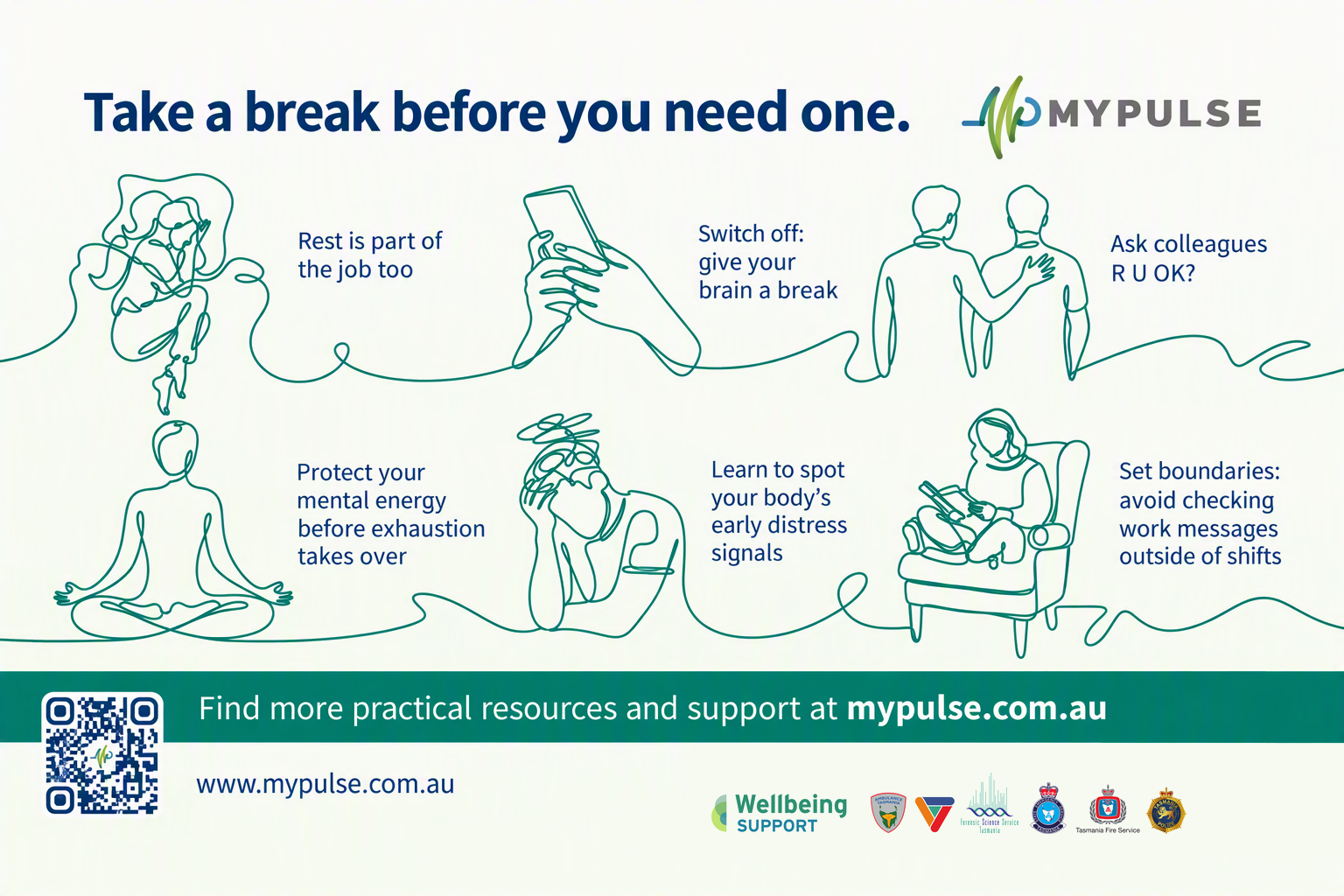
Mental Health Month Focus: Why Hobbies Are More Important Than Ever
In today's fast-paced world, it can be easy to spend our downtime passively scrolling, streaming, or switching between screens. Social media has trained our brains to crave quick dopamine hits and anything slower can almost feel really dull at first.
But hobbies offer something different: They can actively retrain our minds to be able to focus and enjoy the real world.
Research has shown that participating in hobbies can have a positive impact on mental health and wellbeing. People who regularly engage in hobbies often report lower levels of stress, anxiety, and depression, along with higher levels of wellbeing and life satisfaction.
Hobbies can also strengthen social connections, helping people build relationships, feel part of a community, and reduce feelings of isolation. They can have a powerful effect on how our brains function, influencing attention and focus, and even the brain's reward system.
So, what is happening in the brain when we engage in a hobby?
The Science Behind How Hobbies Help the Brain
When we indulge in a hobby that we enjoy, it triggers the release of dopamine, the neurotransmitter associated with pleasure, motivation and reward.
As we continue to engage in that specific hobby, the brain's reward system is activated, and it continually adapts to our habits and behaviours encouraging us to return to the activity and build new skills over time. This creates a positive cycle of enjoyment and motivation, making us more likely to seek out experiences that provide a deeper sense of fulfilment.
Hobbies can also induce a state of flow, where we become fully absorbed in an activity and lose track of time. This immersive experience gives the mind a break from digital noise, helping to restore attention, improve wellbeing and build a healthier relationship with dopamine and reward.
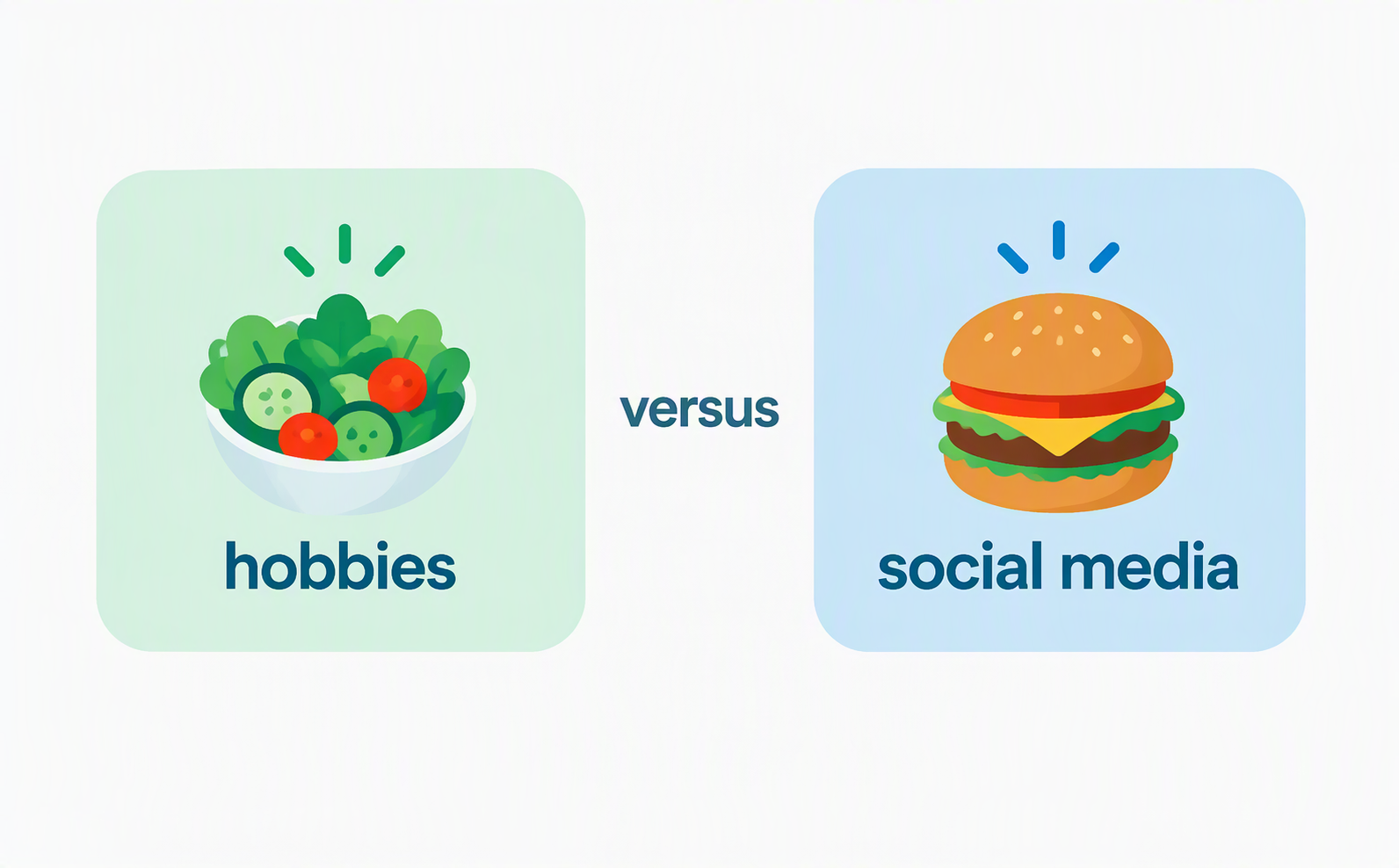
You could think of it this way: Social media often provides the equivalent of "junk food" for the brain, delivering fast, highly stimulating rewards that leave us wanting more. Hobbies, on the other hand, are more like a nutritious meal. The rewards may not be as immediate, but they are often more meaningful, longer lasting and ultimately more satisfying. By repeatedly choosing these more meaningful forms of reward, hobbies can help shift our attention away from constant digital stimulation and towards activities that support focus, wellbeing and long-term fulfilment.
It can give us purpose outside of work
While many of us take pride in the work we do, we are more than our roles at work. Hobbies remind us that our identity extends beyond our job title.
You are not only a police officer, firefighter, emergency services worker, or public servant. You might also be a musician, runner, gardener, photographer, volunteer, painter, or someone who simply enjoys learning new things.
If you're not sure what that looks like for you, the next step is finding a hobby that feels enjoyable, meaningful and easy to stick with.
How to Choose a Hobby You'll Actually Enjoy
At this point, you might be asking yourself, "That's great, but what hobby would I actually enjoy?" For many people, that question isn't as easy to answer as it sounds. You may realise that much of your time outside work is already filled with activities focused on productivity, such as exercising, completing household tasks, or scrolling through your phone. You might even find yourself thinking back to hobbies you enjoyed as a child but haven't revisited in years.
If you're not sure where to start, begin with a simple question: What would I genuinely enjoy doing?
One useful way to think about this comes from the Effort-Recovery Theory, which suggests that most activities fall into one of two categories: effort or recovery. Effort includes the things that require us to expend physical, mental or emotional energy, such as work and daily responsibilities. Recovery, on the other hand, involves activities that help restore our energy and allow us to recharge. Hobbies can play an important role in this recovery process, helping us step away from the demands of work and daily life.
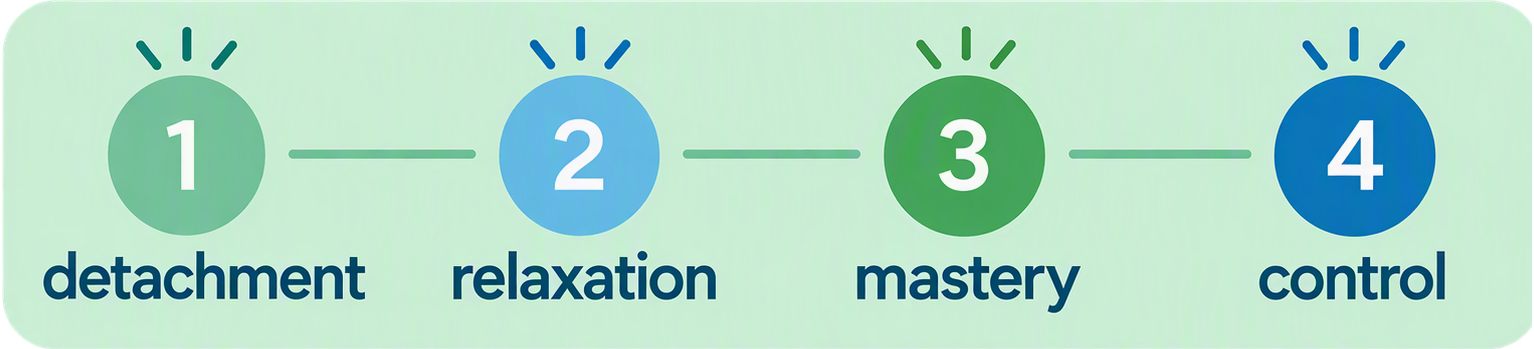
Researchers have identified four characteristics of activities that provide effective recovery. First, Psychological detachment: does the activity help you switch off from work and become absorbed in something else? This can often lead to a state of flow, where you're fully immersed in what you're doing. Second, Relaxation: does the activity feel enjoyable and help you unwind? Third, Mastery: does it allow you to learn, improve or experience a sense of accomplishment over time? Finally, Control: does it give you a sense of choice, independence and ownership over how you spend your time?
To help narrow down your options, it can be useful to think about hobbies in four broad categories that support wellbeing in different ways: Creative, Intellectual, Wellbeing and Connection hobbies.
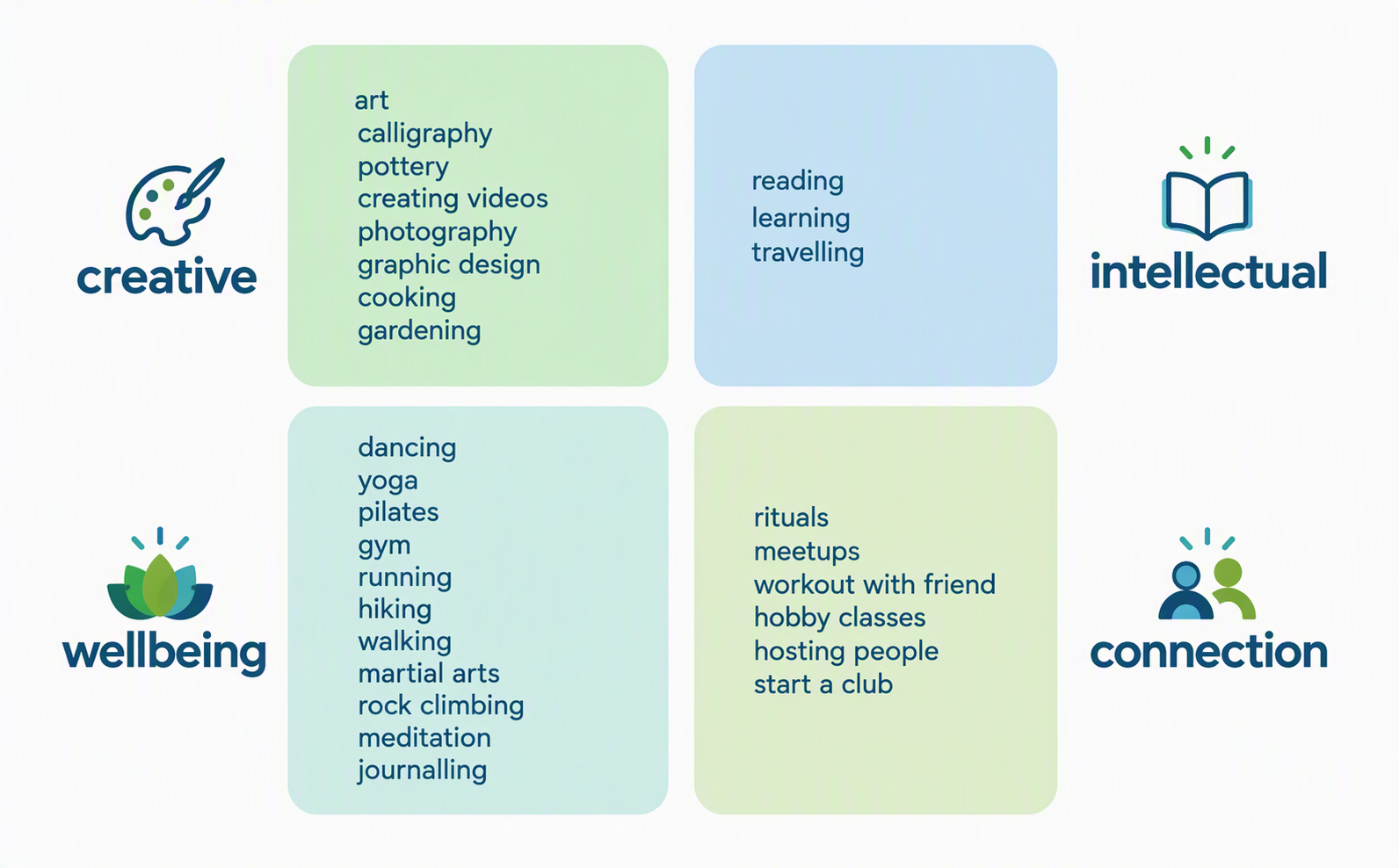
While everyone will naturally gravitate towards some categories more than others, having a mix of activities can provide different benefits and help create a more balanced and fulfilling lifestyle. Use these categories as a starting point rather than a checklist. Pick and choose what appeals to you, try something new, revisit an old interest, and pay attention to what leaves you feeling energised, fulfilled and wanting to come back for more.
References
The science behind why you need a hobby to boost your brain health and self-esteem | Fortune
Cleary M, Le Lagadec D, Thapa DK, Kornhaber R. Exploring the Impact of Hobbies on Mental Health and Well-Being: A Scoping Review. Issues Ment Health Nurs. 2025 Aug;46(8):804-814. doi: 10.1080/01612840.2025.2512006. Epub 2025 Jun 9. PMID: 40489730.
Mak, H.W., Noguchi, T., Bone, J.K. et al. Hobby engagement and mental wellbeing among people aged 65 years and older in 16 countries. Nat Med 29, 2233–2240 (2023). https://doi.org/10.1038/s41591-023-02506-1